FCC Considers Allowing More Political Robocalls Before Midterms, Including Those Created with AI
- Published In: Politics
- Last Updated: Oct 07, 2026
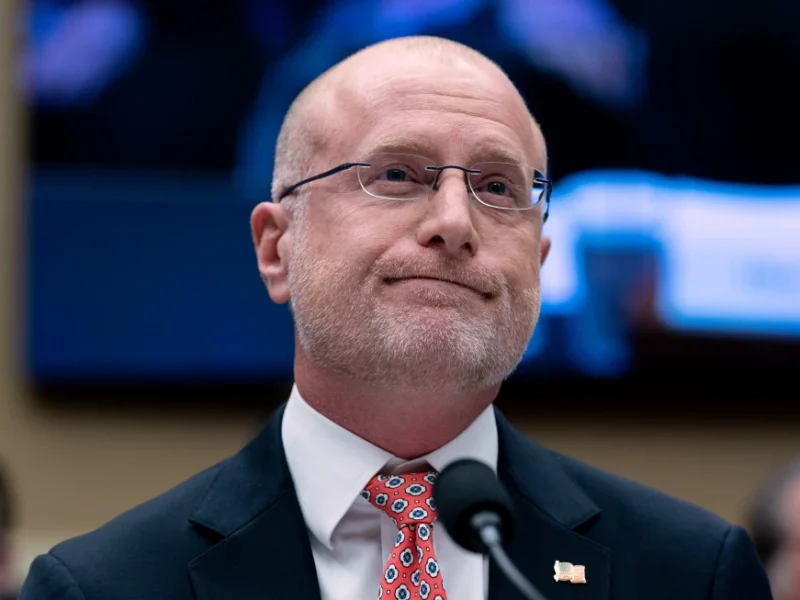
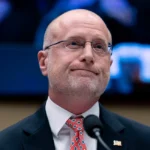
Federal Communications Commission chairman Brendan Carr testifies before the House Committee on Energy and Commerce, Subcommittee on Communications and Technology oversight hearing of the Federal Communications Commission on Capitol Hill in Washington, Jan. 14, 2026. (AP Photo/Jose Luis Magana, File)
By ALI SWENSON
WASHINGTON (AP) — The Federal Communications Commission is considering a request by a conservative group to loosen rules on political robocalls, including those with artificial intelligence-generated voices, before November’s midterm elections.
Federal law currently bans most robocalls to cellphones unless the caller gets consent beforehand. The petition calls for a waiver that would allow political groups to use artificial or prerecorded voices in unsolicited wireless calls.
The Republican-led FCC advanced the request for public comment and could rule on it as soon as late October.
Consumer advocacy groups warn the proposed change could trigger a surge of unwanted, partisan and potentially misleading automated calls in the critical final days of the election, which will determine which party controls Congress for the final two years of President Donald Trump’s term.
The potential perils became evident two years ago during the presidential primary season when thousands of voters in New Hampshire received a robocall with an AI-generated voice of then-President Joe Biden. The call suggested voters should forgo casting a ballot in the primary and “save” their votes for the general election.
Under the waiver request before the FCC, some state and federal laws protecting against deception and voter intimidation would continue to prohibit certain misleading election-related messages. But granting it could weaken a major deterrent for bad actors, said Tim Harper, who leads the elections team at the Washington-based Center for Democracy and Technology.
Such a ruling close to Election Day would open “a huge opportunity for abuse during a period where harm has outsized impact,” he said. “Campaigns will use this technology to target voters in deceptive ways.”
A tool for better communication or misleading messages?
The Club for Growth, a right-leaning economic policy group seeking the change, said it could help political organizations better communicate with potential voters, including in more languages, and improve polling accuracy by helping groups reach more voters. It calls current federal rules outdated and argues they dampen freedom of speech.
The nation’s communications regulatory body would have to act within a compressed schedule to grant the waiver in time to affect the midterm elections. Critics said it wouldn’t be the first time the FCC, which has become closely aligned with the president during his second term, has bypassed procedural norms to serve its political agenda.
Its Republican chairman, Brendan Carr, launched an unusual early review of broadcast licenses for several ABC-owned local broadcast stations, prompting the company to sue. It said the review years ahead of schedule was unconstitutional, a violation of free speech and a retaliation for content Trump dislikes.
The FCC didn’t respond to a request for comment on the petition.
Ana Gomez, the sole Democrat among the FCC’s three active commissioners, told The Associated Press she opposes the move and thinks it would create “a tsunami of robocalls and misinformation.”
“We’ve already seen dark money groups use AI to put candidates’ likeness behind inflammatory comments ahead of this election,” Gomez said. “Exempting political calls from the need for consumer consent would supercharge that strategy, and misleading messages could land directly on the handheld phone of nearly every voter in our country.”
Political robocalls have caused controversies before
In past elections, deceptive political robocalls have resulted in significant fines associated with the Telephone Consumer Protection Act, the federal law at the center of the petition.
In 2020, tens of thousands of prospective voters in majority-Black areas of the U.S. received robocalls falsely warning that if they voted by mail, they could face arrest and debt collection.
The two conservative hoaxers behind the calls, Jacob Wohl and Jack Burkman, were criminally charged for the calls and fined some $5.1 million for violating the act.
The political consultant behind the 2024 New Hampshire robocalls mimicking Biden’s voice said he did it to send a wake-up call about the potential dangers of AI. He was acquitted of criminal voter suppression charges but faced fines and civil damages associated with federal law.
Shortly after the New Hampshire robocall caught authorities’ attention, the FCC ruled that robocalls made with AI voice-cloning tools were outlawed under the consumer protection act.
The change could boost various types of AI calling
If the commission pivots to grant the Club for Growth’s petition, political groups of all stripes could amp up their use of AI to prerecord messages that play when voters pick up the phone. They also could use the technology to engage in live conversations with voters driven by AI large language models.
Mekela Panditharatne, senior counsel in the democracy program at the Brennan Center for Justice, warned that such conversations hold risks. An AI system could make false promises about a candidate or manipulate voters in conversation by providing inaccurate or incomplete information.
Harper, from the Center for Democracy and Technology, said there also could be a privacy risk for voters who might not know how an AI agent on the line with them is capturing or repurposing their data.
The Club for Growth has argued the waiver would help create a more uniform regulatory landscape, given that unsolicited automated calls to landlines are already allowed. If the waiver is granted, callers would still be limited by certain conditions, including allowing consumers to opt out and making no more than three calls within 30 days to each individual recipient.
A public comment reply period on the petition ends Oct. 19, at which point the FCC could move forward on a decision.