Warsh Likely to Side with Financial Markets Over Trump as Fed Rate Hike Expected
- Published In: Politics
- Last Updated: Sep 16, 2026
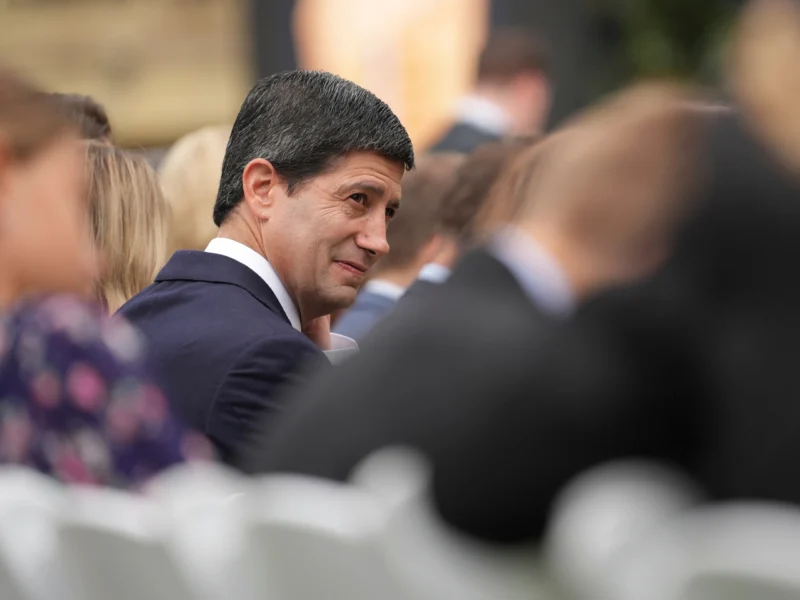
Federal Reserve Board Chairman Kevin Warsh attends an observance ceremony on the 25th anniversary of the 9/11 attacks, Friday, Sept. 11, 2026, at the Pentagon in Washington. (AP Photo/Mark Schiefelbein)
WASHINGTON (AP) — Barely four months into the job, Federal Reserve Chair Kevin Warsh is stuck between two strong and opposing forces: Financial markets that anticipate the central bank will raise interest rates, and President Donald Trump, who wants the Fed to cut them or leave them unchanged.
Economists expect that on Wednesday, Warsh and his fellow policymakers will side with the markets.
Warsh, economists say, has largely boxed himself into a rate hike after delivering a high-profile speech last month warning that inflation remains too far above the Fed’s 2% target and might require higher borrowing costs to bring it down. A report last week showing inflation is still stubbornly high largely sealed investors’ expectations.
Warsh has faced this dilemma before. Soon after becoming chair May 22, he delivered tough rhetoric on inflation, but in late July the central bank left its key rate unchanged. After he provided little explanation for his decision at a press conference, investors pushed up longer-term interest rates, accelerating a process that is still ongoing. This week, the rate on the 10-year Treasury bond reached 5% for the first time in three years. Mortgage rates, which closely follow the 10-year Treasury, have also risen.
If the Fed doesn’t hike its key rate Wednesday, it risks a replay of what happened in late July, economists say. When investors expect inflation to stay high, they demand higher interest rates on government and corporate bonds to compensate.
“That is the paradox: A hike now could lower long-term rates later,” Diane Swonk, chief economist at KPMG, wrote in an email. “Restore faith in the 2% target, then the inflation premium can fall. Fail, and markets will tighten instead through higher mortgage rates, business borrowing costs and interest on the debt.”
A quarter-point rate increase would be the first in three years and push the Fed’s benchmark rate to about 3.9%.
While campaigning for the top job last year, Warsh said the Fed could lower interest rates. But since getting the nod, the Iran war has sharply raised gas prices, lifting inflation to 3.7% in July, according to the Fed’s preferred measure. In April 2025, before Trump’s tariffs, it had fallen to 2.3%.
Core inflation, which excludes the volatile food and energy categories, was 3.3% in July, up from 3% just before the Iran war.
If the Fed forgoes a rate hike, it would risk being seen as giving in to pressure from the White House, which could undercut its credibility with financial markets.
“Kevin cares about his legacy,” said Kristin Forbes, an economics professor at MIT’s Sloan School and former policymaker at the Bank of England. “And he knows that Fed chairs who follow political pressure instead of the economy do not go down well in the annals of history.”
Trump harshly criticized Warsh’s predecessor, Jerome Powell, for not cutting rates quickly enough. His Justice Department even launched a criminal investigation into Powell over brief testimony he delivered to Congress last year, though that probe was eventually dropped.
Kevin Hassett, Trump’s top economic adviser, was asked in an interview with Fox News on Sunday how Trump might react to a rate hike.
“I’m sure he’s not going to be super happy about it, but he will defend the independence of Kevin Warsh above all,” Hassett said.
Warsh might also have a measure of protection from the fact that his father-in-law is Ronald Lauder, a friend of Trump’s and a billionaire donor to his campaigns.
Even if Warsh decides to support a rate hike, it’s not clear how many more will follow. It’s unusual for the Fed to change rates just once. Typically the central bank embarks on a series of hikes or rate cuts to push the economy in the direction it seeks.
There is one precedent for a single hike: In 1997, former chair Alan Greenspan lifted rates by a quarter-point in March of that year. Yet a financial crisis ignited in Asia that July, prompting the Fed to remain on hold. When the crisis worsened in 1998, the Fed ultimately cut rates three times that fall.
For now, Wall Street investors anticipate the Fed will hike three times, with additional increases in December and March.
But Jonathan Pingle, an economist at UBS, said it is possible that if future inflation data showed price increases cooling, the Fed could forgo more hikes.
“They don’t have to follow through on that if the data goes their way,” Pingle said.
On Wednesday, the Fed will provide some hints about its next moves when it releases its quarterly economic projections, which will include a forecast of where its benchmark rate will be at the end of this year and next.