Trump is Proposing a $12B Aid Package for Farmers Hit Hard by His Trade War with China
- Published In: Politics
- Last Updated: Dec 08, 2025
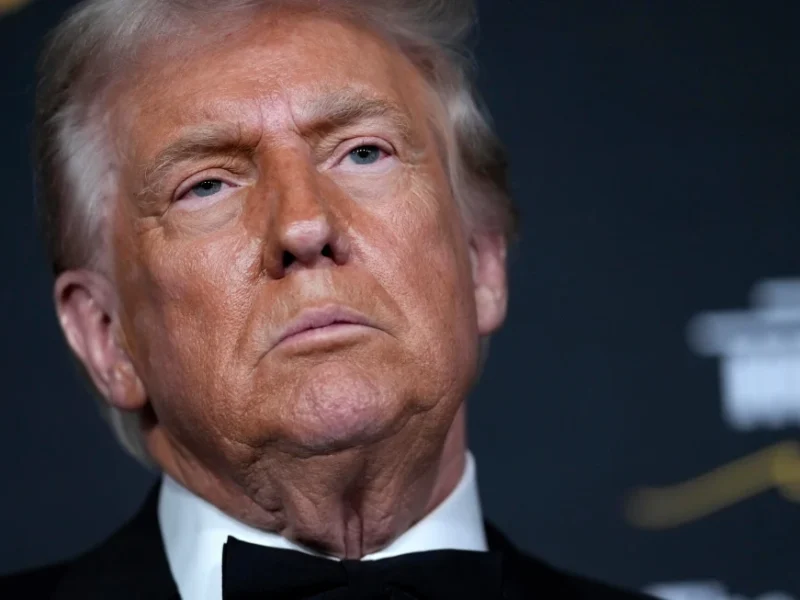
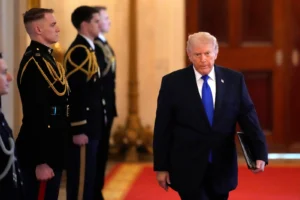
President Donald Trump walks the red carpet before the 48th Kennedy Center Honors, Sunday, Dec. 7, 2025, at the John F. Kennedy Center for the Performing Arts in Washington. (AP Photo/Julia Demaree Nikhinson)
BY SEUNG MIN KIM, JOSH FUNK AND DIDI TANG
WASHINGTON (AP) — President Donald Trump is planning a $12 billion farm aid package, according to a White House official — a boost to farmers who have struggled to sell their crops while getting hit by rising costs after the president raised tariffs on China as part of a broader trade war.
According to the official, who was granted anonymity to speak ahead of a planned announcement, Trump will unveil the plan Monday afternoon at a White House roundtable with Treasury Secretary Scott Bessent, Agriculture Secretary Brooke Rollins, lawmakers and farmers who raise cattle and grow corn, cotton, sorghum, soybeans, rice, wheat, and potatoes.
Farmers have backed Trump politically, but his aggressive trade policies and frequently changing tariff rates have come under increasing scrutiny because of the impact on the agricultural sector and because of broader consumer worries.
The aid is the administration’s latest effort to defend Trump’s economic stewardship and answer voter angst about rising costs — even as the president has dismissed concerns about affordability as a Democratic “hoax.”
Upwards of $11 billion is set aside for the U.S. Department of Agriculture’s Farmer Bridge Assistance program, which the White House says will offer one-time payments to farmers for row crops.
Soybeans and sorghum were hit the hardest by the trade dispute with China because more than half of those crops are exported each year with most of the harvest going to China.
The aid is meant to help farmers who have suffered from trade wars with other nations, inflation, and other market disruptions.
The rest of the money will be for farmers who grow crops not covered under the bridge assistance program, according to the White House official. The money is intended to offer certainty to farmers as they sell their current harvest, as well as plan for next year’s crop.
China purchases have been slow
In October, after Trump met Chinese leader Xi Jinping in South Korea, the White House said Beijing had promised to buy at least 12 million metric tons of U.S. soybeans by the end of the calendar year, plus 25 million metric tons a year in each of the next three years. Soybean farmers have been hit especially hard by Trump’s trade war with China, which is the world’s largest buyer of soybeans.
China has purchased more than 2.8 million metric tons of soybeans since Trump announced the agreement at the end of October. That’s only about one quarter of what administration officials said China had promised, but Bessent has said China is on track to meet its goal by the end of February.
“These prices haven’t come in, because the Chinese actually used our soybean farmers as pawns in the trade negotiations,” Bessent said on CBS’ “Face the Nation,” explaining why a “bridge payment” to farmers was needed.
Farmers appreciate the aid package, but they say it’s likely only a down payment on what’s needed and government aid doesn’t solve the fundamental problems farmers are facing of soaring costs and uncertain markets for their crops. During Trump’s first term, he gave farmers more than $22 billion in aid payments in 2019 at the start of his trade war with China and nearly $46 billion in 2020, although that year also included aid related to the COVID pandemic.
But farmers want to make a profit off of selling their crops — not rely on government aid to survive.
“That’s a start, but I think we need to be looking for some avenues to find other funding opportunities and we need to get our markets going. That’s where we want to be able to make a living from,” said Caleb Ragland, the Kentucky farmer who serves as president of the American Soybean Association.
Senate Minority Leader Chuck Schumer, D-N.Y., said the president “wants credit for trying to fix a mess of his making” and blamed Trump’s tariffs for the adversity faced by farmers.
“Trump’s tariffs are hammering our farmers, making it more expensive to grow food and pushing farmers into bankruptcy,” Schumer said on the social media site X. “Farmers need markets to sell to — not a consolation prize for the ones he wrecked.”
Rebecca Wolf, a senior food policy analyst at Food & Water Watch, an advocacy group focusing on food sustainability and clean water, added that bailouts are “a denigrating Band-Aid to farmers” who have been left vulnerable to trade wars by “decades of misguided domestic policy.”
“Trump’s tariff tantrum and belittling bailouts will deepen agricultural sector consolidation, funneling money to a powerful few corporations, while running farmers further into the ground,” Wolf said.
Trump has also been under pressure to address soaring beef prices, which have hit records for a number of reasons. Demand for beef has been strong at a time when drought has cut U.S. herds and imports from Mexico are down due to a resurgence in a parasite. Trump has said he would allow for more imports of Argentine beef.
He also had asked the Department of Justice to investigate foreign-owned meat packers he accused of driving up the price of beef, although he has not provided evidence to back his claims.
On Saturday, Trump signed an executive order directing the Justice Department and Federal Trade Commission to look at “anti-competitive behavior” in food supply chains — including seed, fertilizer and equipment — and consider taking enforcement actions or developing new regulations.
___
Associated Press writers Michelle L. Price in Washington, Bill Barrow in Atlanta and Jack Dura in Bismarck, North Dakota contributed to this report.